

Audio Books
Audio Books

to read more:
Ajahn Chah |
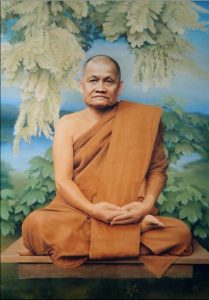
Ajahn Chah was born on June 17, 1918, in a rural village near the town of Ubon Rajathani in northeastern Thailand.
He lived the first part of his life like any other boy in ‘rural Thailand’ at the time, in a large and pleasant family. Following tradition, after completing basic education he was ordained as a novice monk at the village's local monastery.
Three years later he returned to his parents' house to help with the farm's work, but feeling an attraction for monastic life, at the age of twenty he decided to go back to the monastery and ordain himself as a monk.
He spent the first years of his life as a monk studying the foundations of the Dhamma, the Vināya (monastic code; discipline), the Pāli language and the scriptures. In his fifth year as a monk, his father became seriously ill and died. This brutal event made clear to Ajahn Chah the fragility and precariousness of human life; made him think deeply about the true purpose of life, for although he had studied thoroughly, he felt no closer to having a personal understanding of the end of suffering. With all this, as he devotes himself to translating comments from the Dhammapada, he realizes the disparity between his life and that of the monks of the Buddha's time, in which they roamed in the "lonely, impetuous and determined" forests; and he was there, clinging to the books in the study room of the monastery. A feeling of disappointment seized him and a desire emerged to discover the true essence of Buddhism. Finally, in 1946, he left his studies and went on pilgrimage.
He walked for several years staying in forests and receiving food in the villages through which he passed on his way, spending seasons in monasteries, assimilating the teachings and practicing meditation. It was during his stay at Wat Kow Wongkot Monastery that he first heard of Ajahn Mun, a highly revered Meditation Master. A layman informs him where he is and Ajahn Chah, excited to meet an accomplished master, sets off for the Northeast in search of Ajahn Mun.
As soon as he entered the monastery where Ajahn Mun was staying, Ajahn Chah was invaded by the quiet and discreet atmosphere of the site. The silence was full of vibration.
By this time Ajahn Chah was grappling with a crucial problem. He had studied the teachings of morality, meditation, and wisdom, presented precisely and in detail, but he could not understand how they could be put into practice.
After paying due respects, Ajahn Chah posed his question to which Ajahn Mun replied by mentioning that although the teachings are really extensive, in essence they are very simple. Consciously, if we see that everything arises in the ‘heart-mind’ …aí is the real way! This succinct and direct teaching was a revelation to Ajahn Chah, transforming his way of practicing. The path was clear! Ajahn Mun advised him on the basic principle of the ‘Two Guardians of the World’: hiri (a sense of conscious shame) and ottapa (intelligent fear of consequences). He also told her about the Eightfold Path, about the Four Roads to Spiritual Success and the Five Spiritual Powers, about how things really are and about the path to liberation. Ajahn Chah was ecstatic.
Ajahn Chah later said that although he arrived very tired, after hearing Ajahn Mun all the fatigue disappeared and he felt light, with a clear and quiet mind.
The next day Ajahn Mun gave more teachings and Ajhan Chah was now clear about his practice. He felt a joy and ecstasy in the Dhamma like never before. One of the teachings of Ajahn Mun that most inspired him was that of the Sikkhibhuto, being himself a “Truth Witness” and one of the most enlightening explanations was the distinction between the mind and the transitory states that arise and disappear within it, which we often believe to be real, identifying them with the mind itself.
During the seven years that followed Ajahn Chah practiced in the austere style of the Forest Tradition, wandering through the forests in search of calm and secluded places where he could develop his meditation. He lived in jungles filled with snakes and tigers, using reflections on death to penetrate the true meaning of life.
In 1954 he was invited back to the village where he was born and settled in a ‘haunted’ forest called ‘Pah Pong’. Despite malaria, precarious shelter and little food, many disciples gathered around him. There began the monastery today called ‘Wat Pah Pong’ and many other affiliated monasteries spread throughout Thailand.
Ajahn Chah’s teachings contain what can be called the ‘heart of Buddhist meditation’ – the simple and straightforward practices of calming the heart and opening the mind to the true understanding of truth. This form of constant vigilance has rapidly grown as a Buddhist practice in the West, teaching us to deal with denser mental states such as fears, greed, or feelings of loss, and to learn the path of patience, wisdom, and altruistic compassion.
According to Ajahn Chah, mind training is not just about sitting with your eyes closed or perfecting a meditation technique. This is a great renunciation.
One of the most notable features of Ajahn Chah’s teaching is his emphasis on the monastic order – the Sangha – and its use as a vehicle for the practice of the Dhamma. The results he obtained by creating and teaching solid monastic communities are quite evident in the numerous monasteries that were created and developed through him.
However, one cannot in any way deny his particular ability to teach the lay community with which he communicated brilliantly, regardless of its human and social condition.
Ajahn Chah's simple yet profound teaching style was particularly appealing to Westerners. In 1966 the first Western monk, Venerable Ajahn Sumedho, came to Wat Nong Pah Pong. From then on the number of Western visitors began to increase considerably and about seven years after the arrival of Venerable Sumedho, a new monastery was formed of which he would become the abbot – Wat Pah Nanachat (International Forest Monastery).
In 1977 Ajahn Chah and Ajahn Sumedho are invited to visit England, where two years later would be founded the first European monastery of the forest tradition, Chithurst Buddhist Monastery. At that time, Ajahn Chah visited the United Kingdom again and also went to Canada and the United States to teach.
In 1981 Ajahn Chah became ill, staying bedridden until the end of his life. This event led monks to take turns caring for the master for ten years, thus creating an even greater sense of community.
In 1992 Ajahn Chah died leaving behind a bustling community of monasteries in Thailand, England, Switzerland, Italy, France, Australia, New Zealand, Canada and the United States of America, where the Buddha's teachings continue to be practiced through the inspiration of this great meditation teacher.
At this moment, with the existence of the Monastery of the Forest Tradition in Portugal, this country is also privileged and blessed with the wisdom and legacy of Ajahn Chah.



 EN
EN  PT
PT